


This is the story of a strange, culinary journey, which begins with a trip to Greece I took several (many) years previous:


Suffice it to say, I wanted to travel to see Macedon, Thessalonika and Thessaly, for reasons of historical tourism including, but not limited to, Alexander and Alaric. It is beautiful in both areas of Greece, and I can thoroughly recommend that one visit it at some point in time! (If you do, be sure to read some histories such as The Last Centuries of Byzantium by David Nicholl and Latins and Greeks for more scholarly fare. Also, check out things like T.E. Lawrence’s translations of Homer and some of the plays by Aeschylus.
At any rate, back to food!
Dolmathes are these lovely little simmered, stuffed grape leaves with bits of seasoned meats in them, with a lovely lemony sauce. Suffice it to say, they are quite difficult to obtain in Canada in most seasons, due to the lack of grape leaves 😦 This is a consistent grief in my life, and as I have not got ’round to planting grapes yet, I often bemoan this shortfall.
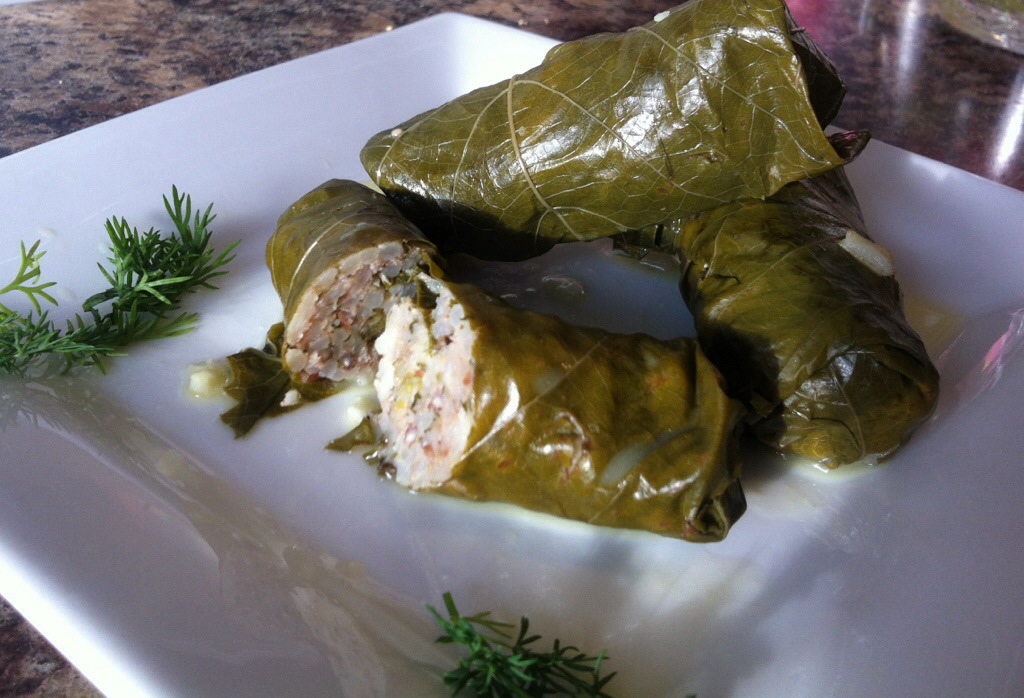
Having a plethora of dandelion leaves and flowers this year, (see my earlier post re: reluctance to mow) I was seized by a sudden inspiration! As Dolmathes comes from the root word Dolma, which means a thing stuffed with another thing…
… and as I live in a German-based culinary area where Rouladen meat is plentiful (these are thin strips of beef that are cut for stuffing around things, or rolling themselves and roasting in sauce)
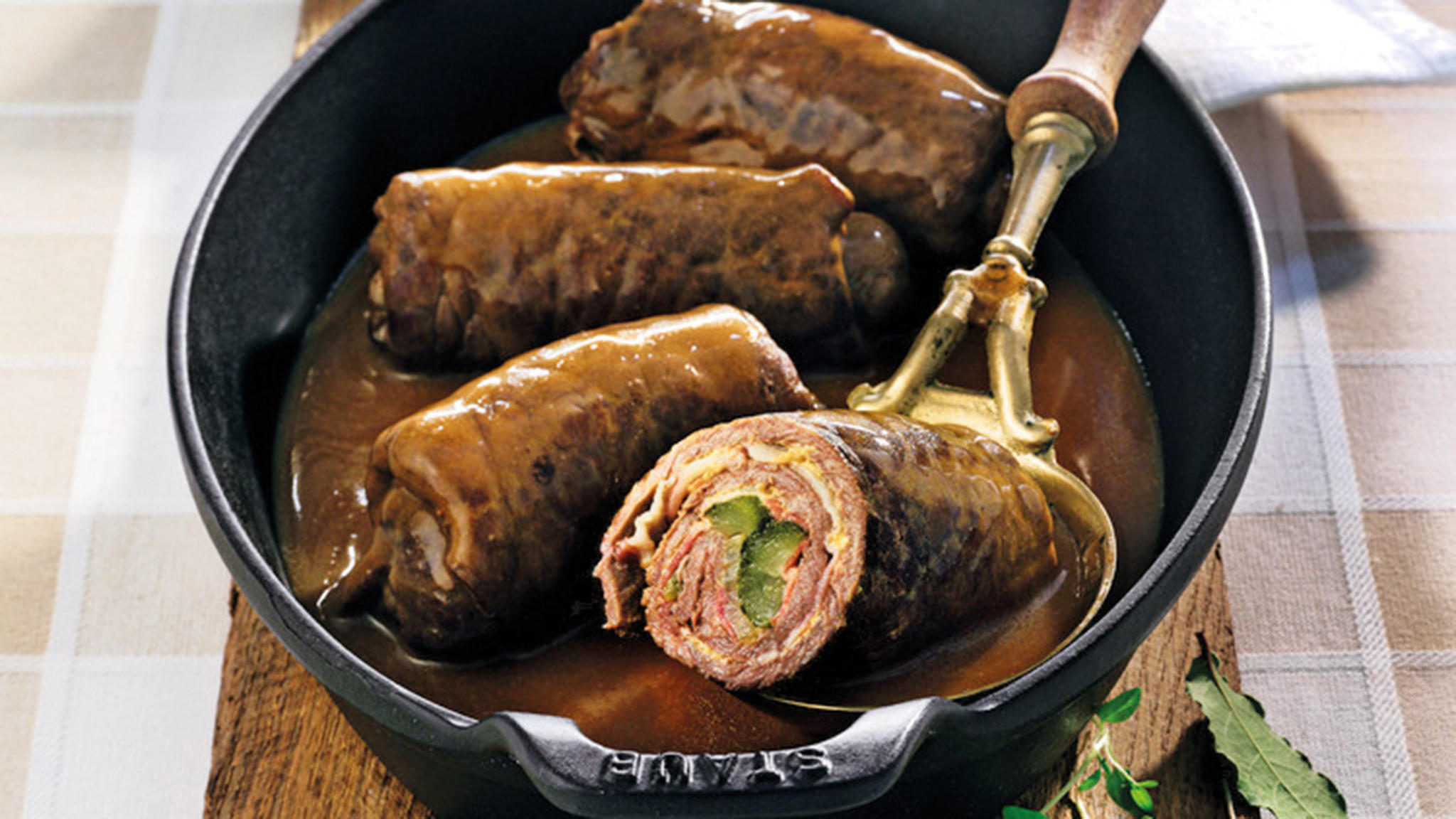
… why not stuff Rouladen with dandelion leaves and marinade, and make inverse Greek Dolmathes! (Or dandelion Rouladen mit Citronsauce, but this defeats the purpose of assuaging my desire for Greek cuisine! Commence history debate re: WWI and WWII in comments below).
Thus, my innovative recipe was born. Here’s how it goes:
Ingredients:
(If you can find and afford them, the more organic ingredients you can find, the better, but make certain you get organic lemons and/or lemon juice, because you’ll be wanting to try these gravy-infused lemon slices with your meal, and will want to avoid the goo that can be put on non-organic lemons)
Rouladen meat
4 lemons, or 1.25 cup lemon juice. Take the zest from one lemon, then remove and dice the pulp from it as well. Slice thickly the other lemons and set aside for cookery.
tapioca starch or other thickening agent
olive oil, 1/2 cup
touch of dandelion wine or failing this, a nice gewurtztraminer or non-dry white wine
toothpicks or other means of fastening our rolls
Filling:
** N.B. If you have a sour/bitter-sensitive palette or are new to the wonderful world of native greens, then you might want to add a 1/2 tsp or tsp of sugar/honey to your filling below.
1.5 cups chopped, lightly compressed dandelion leaves/ each rouladen
finely chopped red pepper
oregano, rosemary, sage, paprika, light chili dusting, salt, fresh cracked black pepper
olive oil, 4 tsbp/ rouladen filling or enough to compress the leaves
dandelion wine or other wine to taste and to help make a good paste
(to this, we can add breadcrumb paste, brown rice or any other sort of carbohydrate like mashed potatoes, but in this recipe I wished my dandelion leaves to be taken straight!)

First, we take a large bowl and combine our dandelion leaves, closely chopped, with our other filling ingredients. Combine thoroughly, making certain that all the parts of the leaves are covered well with the spices and the oil/wine mixture. If one uses starches along with the paste, one might want to add an egg to help them combine, or a touch of yogurt or milk if one is not lactose intolerant like myself. Add one lemon’s worth of pulp and juice, along with its zest, no matter the filling!
Second, we spread out a spattering of olive oil lightly across the meat. Then we spread our filling evenly across the rouladen.


Third, we roll each up and fasten it thoroughly with a toothpick.

Fourth, we cook either in a crock in the oven (I would imagine for over an hour at 375F, or until the center of the rolls is moist and cooked through), or, if you are one of those wise souls with cast iron, flavor-instilling cookware, on the stovetop. Look below for the sauce recipe, if you take the oven approach.
(I cannot over-recommend cast iron at this point for providing all the lovely flavour, body and preservation of that ‘roasted on a spit, or in an old European oven’ taste, even on the most modern of cookstoves like this ceramic one! Plus, they travel well and provide consistent results no matter where you go! Be certain you care for them properly, though- see upcoming article for my opinions on that matter).
Fried approach:
Heat the oil in the pan until it is just about ready to snap when water is sprinkled on the oil’s surface, then lower to a good simmer.
Gently pour in the lemon juice. Add more spices to the oil, and stir in the wine until a nice sauce results. Raise the temperature slightly, not to boiling but a good, high simmer. Lay the dolmathes in one at a time. Take the lemon slices from prepping and place overtop of the dolmathes, and, if you have them, some good crisp green grapes like these.

Leave to simmer, turning once or twice until all sides of the rouladen are nice and brown.

After the first turn, leave the lemons under the dolmathes to infuse the flavour and cook the lemons through. When the dolmathes are nearly cooked, then add your thickening agent to make a nice, viscous sauce.

I cooked mine with some nice brown rice, and fresh vegetables. Any sort of Greek dish, like roasted spiced potatoes or such would do nicely. These worked beautifully, as you can see below:

I cannot recommend these little beauties enough!

 Firth of Clyde
