


In many parts of the world, especially in this part of the world in which I find myself, summer season has become fire season.
This is a regrettable state of affairs. People are talking in British Columbia about banning travel in the ‘back country’, or wilderness. This is part of the beauty of this still rugged, largely undeveloped province- its vast empty forests and mountains. However, it seems that many of the fires on the fire map are human caused, and since lightning caused fires are also a significant threat, there is a certain point to limiting the potential for damage.
I’m not particularly interested, on this blog, at any rate, in jumping into a rather inflammatory debate about the five w’s of how British Columbia- and the world- got itself into this mess. The fact of the matter is that we are living inside of a box of matches, each of the around 5 million people in this lovely province.
Its motto is Splendour Sine Occasu, which is latin for Splendour Without Diminishment. This is a truly tragic motto for a province that is truly a paradise, with a wealth of environments that take in not only snippets of places all over the world like prairie and steppe, but also contain specific ecosystems unique to this region.
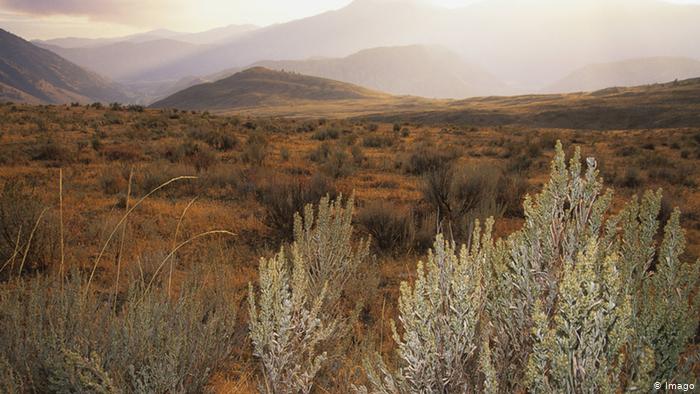
British Columbia is the northernmost point of the long desert that stretches through North America all the way down to the southernmost part of Chihuhua:

The desert stretches from the American border up nearly to Clinton. It is beautiful country there, where you can find wild sagebrush and even some enterprising cactii.
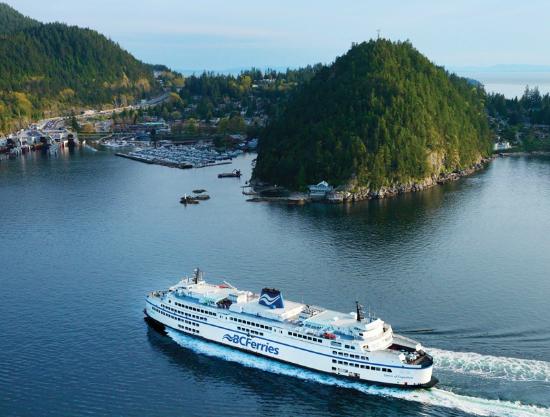
Meanwhile, only five hours and a ferry ride west, you can find the temperate rainforest on the balmy shores of magical Vancouver Island. While some may remember this biosphere from the Claayquot Sound logging protests, this is actually just a last gasp of an environment that covered not only this island, but the Queen Charlottes in the north. Unlike anywhere else on earth -(literally. This is an unique environmental subgroup that is one of the northernmost rainforests) this region is truly a mystical region from another, more magical world. If you see the sense in traveling to the Himalayas or to the Amazon, visit this place, as well… But, tread carefully, as it is smaller by far than most unique biosphere, and shrinking all the time.

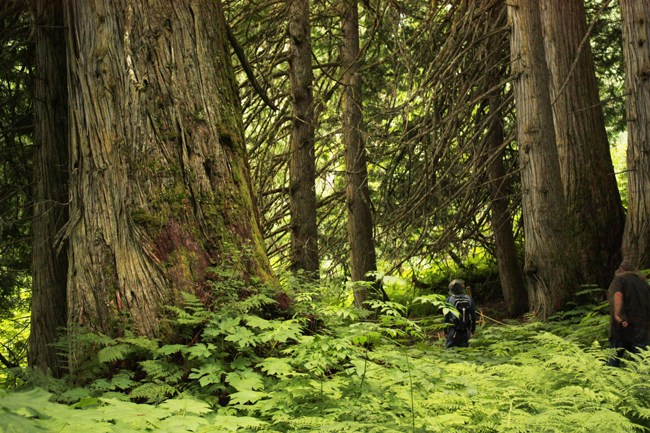
Remarkably, on the other side of the province we find a mirror image of this biosphere, nestled high up in the- yes you’ve guessed it, the MacGregor Mountains!
(I had no idea of this northern rainforest when I saw this range on a map and said, ‘hey, I want to move there and see it, if my clan discovered it!’ This was a bonus of youthful hubris, and a bonny one.)
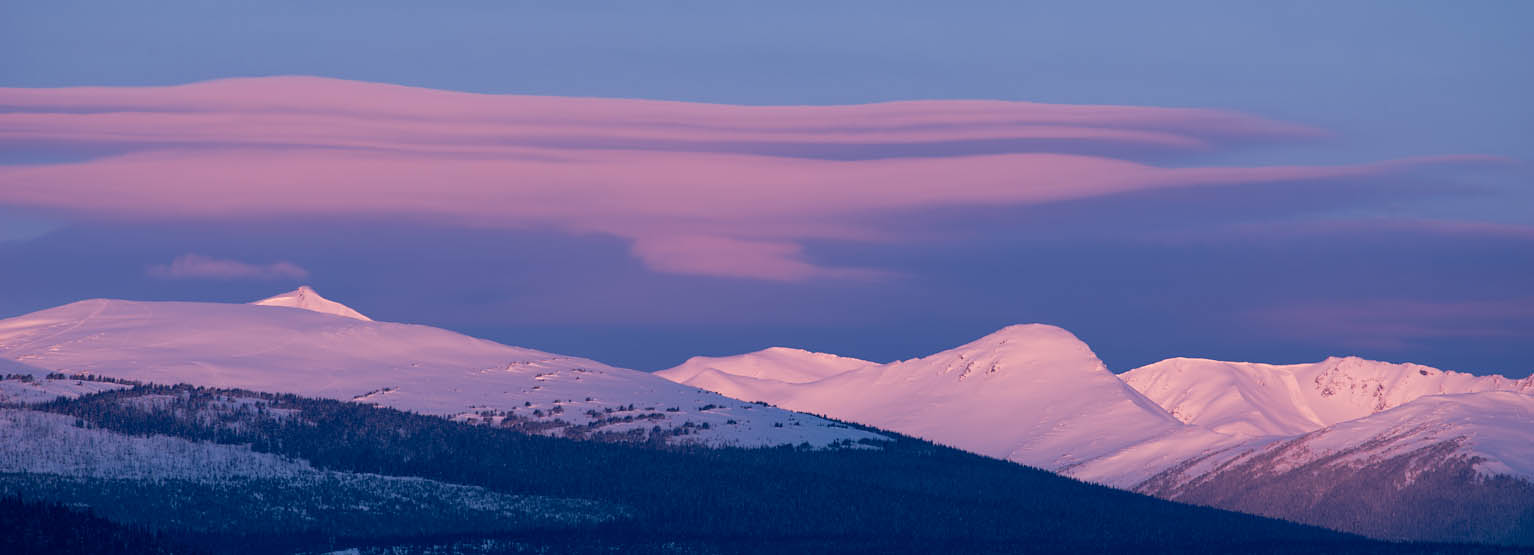

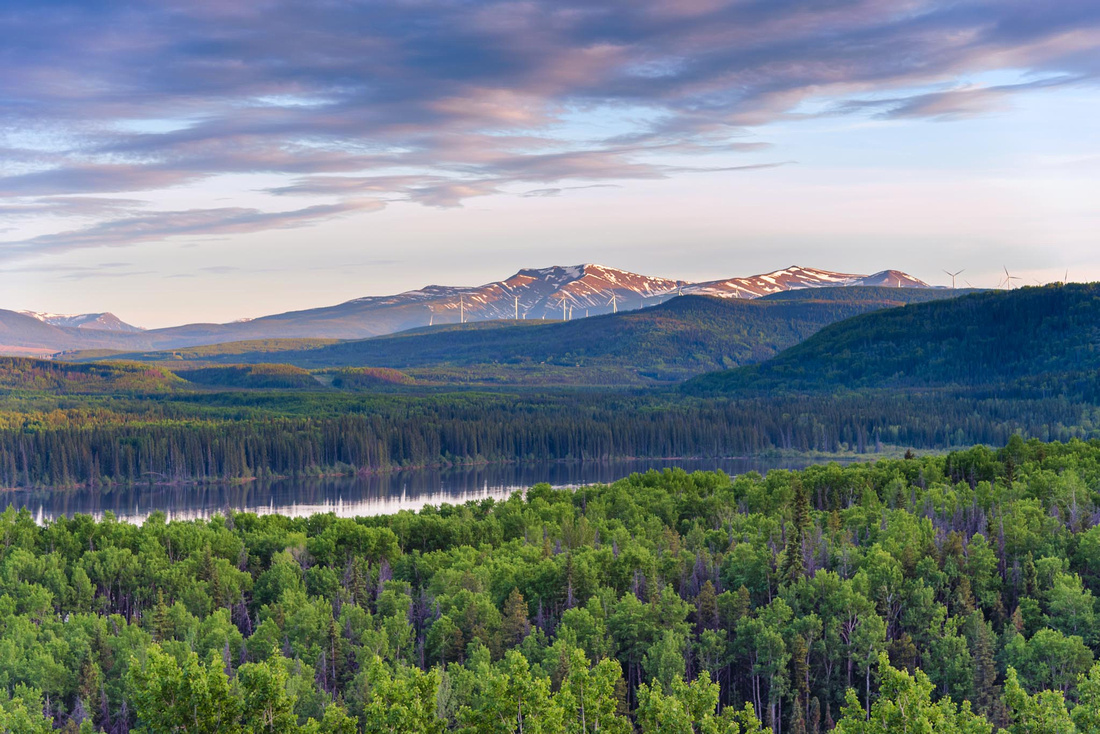 (There they are, seen from their northern range near Tumbler Ridge.)
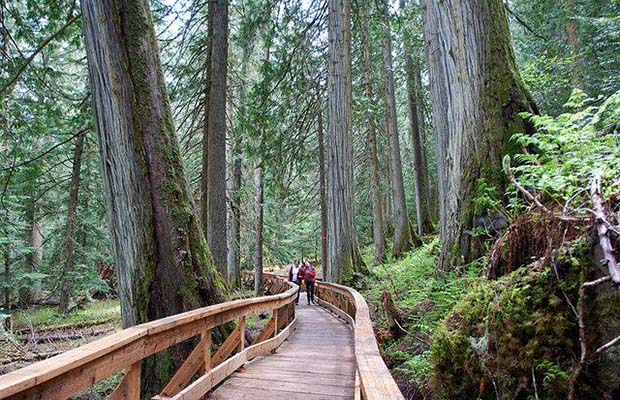
The MacGregor Mountains stretch down across the western central part of the province and into the unique Robson Valley. This is an even more northern rainforest, complete with some of the most high latitude cedar in the world. It is remarkable, to step into this cozy little biosphere and feel as though you are ‘on the island’ as folks call Vancouver Island here… Though you are just an hour away from the great central plains of North America. It is a fabulous wonderland, most especially during the long winters, covered in snow and frosty ice from the high humidity, the cedar boughs glistening and chiming in the gentle breeze…
I can only imagine the wide-eyed wonder of the MacGregors who discovered it. Even the most hardy and practical Scot has an inkling of the Otherworld, and in this place, it is all around one. Marvelous country!
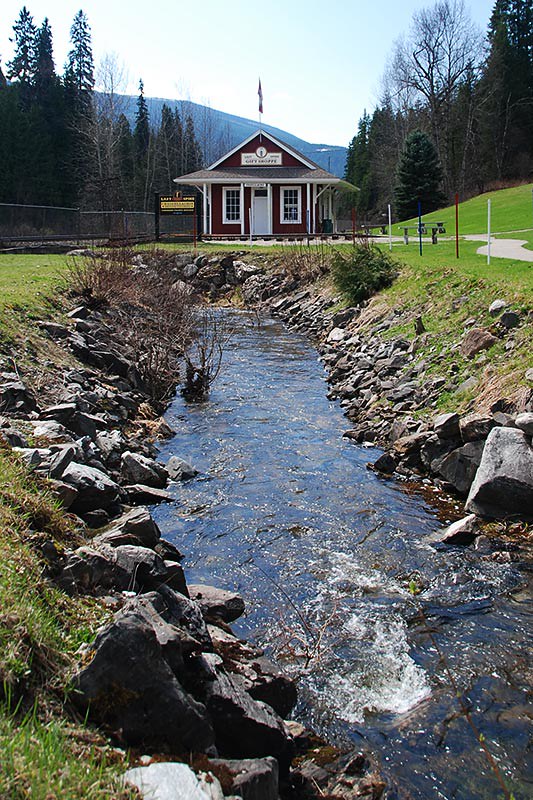
In the south, west of the great desert, are more signs of Scottish visitation, with the last spike of the trans-national railroad set at Craigellachie, and towns like Armstrong and Grindrod and Revelstoke bearing Gaelic flair. These mountains with their shining lakes and fertile meadows popping up like wonders among the forested hillsides produce most of western Canada’s (and America’s) fruit. Peaches, apples, berries and more literally fall off the sides of the lovely winding highways at roadside stands which proliferate the countryside. A resort playland for all who love mountain and water, this region nurtures as it entertains with beauty. (Here is the last spike center at Craigellachie- ah, like a little bit of Scotland, it is!)
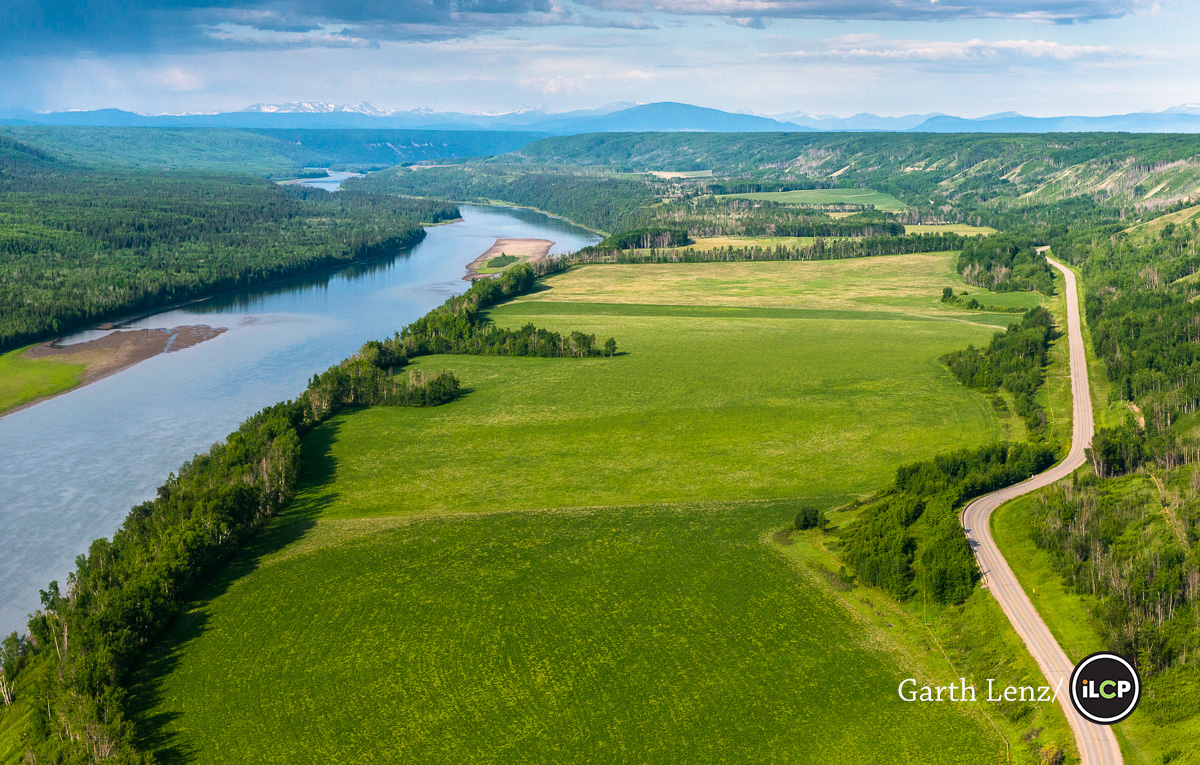
In addition, our curious province of BC has the northernmost fertile farmland, which gets the most sunlight hours if anywhere in Canada. This allows country that is otherwise frigid for seven months of the year to grow crops that help sustain not merely BC, but all of the north. Wheat, oats, barley, and potatoes spring up almost without effort. (Thanks to Garth Lenz for this photograph; sadly, all this fertile farmland is about to be underwater as a result of the Site C dam, but it’s a lovely example of how the entire region springs up in the warmth. Remember, this is at or above 55 degrees north, and the arctic circle is just a hairsbreadth away at 65-66 degrees!)

Literally tens of thousands of hectares of pure, unspoiled forest span the bulk of this province, in addition to these kingdoms in miniature scattered throughout British Columbia’s geography. They, like the Amazon and the Siberian taiga, are the lungs of this world. Home to millions of creatures and northern habitat and breeding ground for animals whose range extends around the globe, British Columbia is an integral part of this tiny, spinning orb we call earth, and home… and one that we should all try to keep as free from the ravages of the flame as possible. If the twin torches of climate change left and heedless human intervention continue unchecked, this is a rare jewel that we will all lose. In losing it, we lose a big part of our ability to survive, not economically, but to live, and breathe, and thrive.


 Firth of Clyde