


This is the Army, Mister Jones-
No More Reading, but Gramophones!
By Clyde MacGregor
Again, we find language conscripted into service for the military, much as my previous essay (which can be found at firthofclyde.home.blog) outlined. Then it was World War I, and T.E. Lawrence had used language to change the tide of war. In discussing the Reading and the Audio-Lingual Approach, we find that language is once again on the front lines.
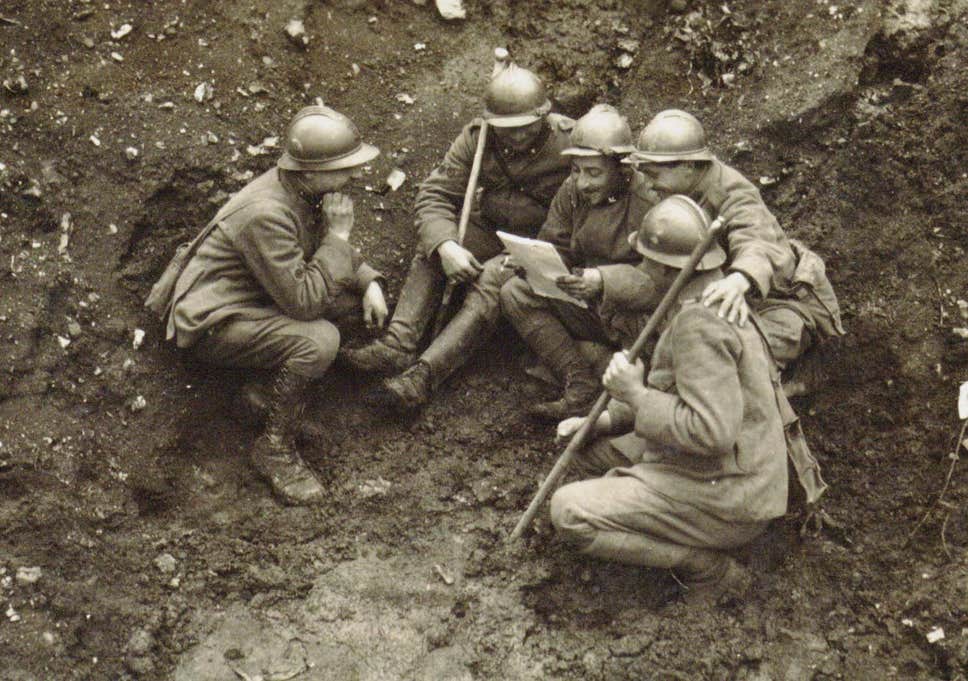
It is interesting to note that the generals who advocated the later Audio-Lingual Approach were themselves taught by the Reading Method. They were American, by and large, and taught in the schools of the 1930s by teachers who left them to their own devices with books to read and tests to write. The behavioralist, B.F. Skinner, would have been familiar with the more introverted Reading Method.
The Reading Method, with its emphasis on mounds of reading of literature, news and texts, required the student to piece together much of the sense of passages by repeated exposure. A root for a verb here, is found in a different form (past tense? Future? Conditional?) there. Was that ‘he’, ‘she’, or ‘they’? Who could say? Not always the teacher. The students would have to figure it out themselves; such was the Reading method. How could they accomplish this feat? Repetition!
And so, we find the kernel of similarity between the two methods. In the Audio-Lingual method, we find that words, phrases, handy ‘keys’ to the language, are repeated by voice and recording over, and over, and over again, until they become deeply ground into the minds of the students. Reading took too long- and it did not encourage discipline, did it? It was not the sort of ‘Nancy-boy’, ‘egg-headed’ introverted thing generals wanted to see their soldiers doing. Why give them time to get soft? The Sergeant Major just whipped them into shape! This was War! Why not make them run around the barracks half the night, with 50 pound bags on their backs, while handy French and German phrases ran through their heads.
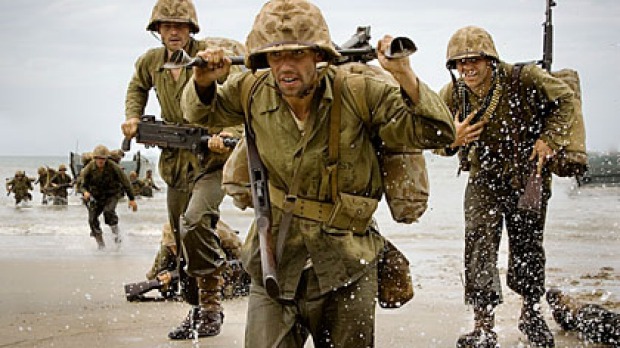
To be honest, it was a brilliant scheme. Soliders would need to recall this information while physically and emotionally exhausted. Under fire, surrounded by Lugers and Panzers pointing straight at them, they would have to be able to speak in German. Reading in a quiet classroom, or in their bunks after mess hall fed them their supper, would not allow that reflexive ‘Sir, Yes Sir!’ immediate response that war would require. By using the Audio-Lingual method, Skinner and the Army had unlocked the potential of subliminalization to teach the mind under the mind, thus ensuring that their boys would have the words to hand, when they most needed it. How did the generals come up with this idea? Through an understanding of how discipline and repetition made behaviors rote, instinctive, automatic- and through recalling their own days being taught by Reading method, going over, and over, and over texts to get it right.
Oh, it is hard to say which of these two methods I would prefer! To read, to perceive the full flavor of a language as it is being used by the pens of native speakers, and to see the little inflections of writers like Cervantes, Goethe, Pushkin or Dumas themselves, this provides a true understanding of the way language can be used! A library of books would be a staple of my class. Whether that was pdfs that could be sent by push email, or a physical shelf, excerpts and passages would be a part of that immersive classroom experience for my students. From simple questions to stimulate learning recall “What was the name of the captain in our passage about the white whale yesterday?” to paragraph and writing practice, readings are a great source for subject matter. They increase the complexity of a student’s ability to use a language- which is, after all, a central point of teaching a language native to a country wherein students are living and working.

Audio-linguistic drills are useful because the repetition allows the subconscious to absorb the flow and syntax of language. The repeated drills in unison take on an hypnotic, rhythmic and singsong quality that can aid in recall. This can help to lower affective filters in ‘the field’ as it were; it could allow students to remember those important parts of language in stress-inducing, real-life circumstances. While I would hope that no student of mine would ever have to use what I teach them in combat, I do hope that, no matter how intense the situation, repeating phrases, conjugations and vocabulary will train their minds, mouths and vocal chords to be able to say what needs to be said. This can bridge the gap between language that is ‘thought out’ and language that is ‘natural’, coming nearly or completely automatically to the student when needed.

I think that the Audio-Linguistic approach fits in well to fire up the students’ minds during the first part of class. It helps them to remember that which they learned before, and to get some much needed rote practice in voicing, word formation and volume. It is active, which prepares them to absorb the new elements in the classroom activities for the day. The Reading approach is useful for homework, but also in smaller bits in class, to allow students to share their opinions in groups and pairs, and in classroom discussion. Again, this approach gives students the hands-on experience with a language they will need to help them succeed on the front lines of daily life.
This is the second of my essays on teaching approaches and their use in the classroom. It is part of a TESOL course offered by Arizona State University via Coursera. If you don’t know about Coursera, you should check it out, here!
References:
The title of the above Youtube piece is a lyric from a World War II song penned by Irving Berlin. Entitled, “This is the Army, Mister Jones”, it is part of a movie from 1943 of the same name. Here is a clip from the movie (which has a young Ronald Reagan in it, by the way :- 0 ) which demonstrates the utter confidence that the US Army had in its military methods to create consistent results. The scene is a performance that the soldiers performed in order to boost morale of civilians and servicemen alike, and the song encompasses the change soldiers underwent from civilian to military life.

 Firth of Clyde